

You do not need a perfect outing to make a day with Grandma or Grandpa feel memorable. You need one activity that fits the time, energy, and distance you actually have. Pick a section below, choose one idea, and let the grandparent and child change it together.
This is a menu, not a checklist. A short conversation over a snack may be the right plan today. The National Institute on Aging includes in-person visits, phone calls, and video chats among ways to stay in touch. The point here is to make those moments easier to begin, whether you share a room or live far apart.
15-minute memories: five things you can do right now
Choose one quick activity and stop while everyone is still enjoying it. None of these needs a craft supply run or an elaborate plan.
- Invent one silly handshake. Let the child choose a gesture, let the grandparent add one, and repeat it at the end of every visit. If movement is uncomfortable, make it a two-word greeting instead.
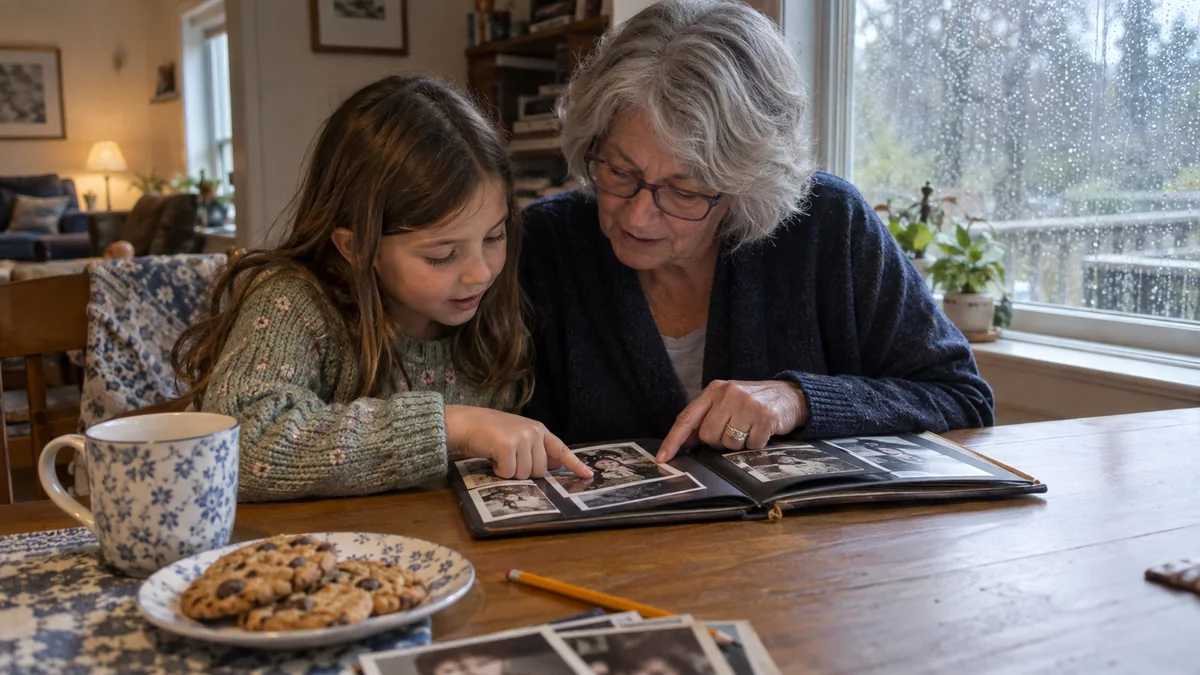
- Let the grandparent show one photo from when they were young. Ask the child to notice one detail first: the clothes, a pet, or who was standing just outside the frame. Then invite the grandparent to tell the part the photo cannot show.
- Make a childhood snack together. It can be as simple as toast made the way Grandma remembers it. The child's job is to ask, “Did you eat this at home or after school?”
- Ask one “When you were my age…” question. Try a favorite game, a school lunch, or a friend. Record the answer only if the grandparent wants it recorded; a conversation is enough on its own.
- Trade one tiny skill. The grandparent teaches a card shuffle, a rhyme, or a family saying; the child teaches a doodle or a playground game. Let both be beginners at something.
If a photograph starts the best conversation, our five-step guide to talking about one family photo offers a gentle next question without turning the moment into an interview.
An easy hour together: five activities with room to linger
An hour works best when one activity leaves space for a detour. Pick something both people can shape rather than asking one person to entertain the other.
- Create a two-photo then-and-now pair. The grandparent chooses an old photo and describes where it was taken. The child takes a new photo of an ordinary present-day spot. Put the two together and ask what changed.
- Make a family recipe in its shortest form. Mix a simple snack or prepare one ingredient together. Ask which part is essential and which part the family always improvises. Write down only the detail the grandparent wants to pass on.
- Take a one-block noticing walk. Walk, roll, or sit somewhere accessible and each point out three things the other might miss. A doorstep or window works too.
- Build a “things we both like” list. Each person names a food, song, place, or game. Find one overlap and one surprise. Use the list to choose a future visit, not to fill a scrapbook today.
- Play the child's game, then the grandparent's game. Give each person the chance to explain a simple game. A deck of cards, guessing game, or drawing prompt is plenty.
For a family that finds conversation harder than the activity itself, these questions to ask your parents beyond “How are you?” can be adapted for a grandparent and child.
Make an afternoon of it: five loose mini plans
A good afternoon has a beginning, a pause, and an easy way to finish. Treat these as 2–3 hour outlines, not commitments to stay busy for every minute. Choose the pace with the grandparent and leave room for rest.
| Mini plan | Start | Middle | Easy finish |
|---|---|---|---|
| Old-photo walk | Pick a family photo with a place in it. | Visit that place if it is nearby and accessible, or look it up together from home. | Take one present-day photo and compare the details. |
| Recipe afternoon | Choose one familiar food and set out ingredients. | Prepare it together, with a seated role for anyone who wants one. | Eat it and save one sentence about why it matters. |
| Grandparent's choice | Ask the grandparent to choose a film, music, or a neighborhood stop from their younger years. | Enjoy it together and let the child ask what feels familiar or different. | Have a snack and share one favorite moment. |
| Two-generation art table | Find paper, pens, and two old photos. | Draw the same memory or recreate a photo with objects at home. | Put the versions side by side and tell the story behind one detail. |
| Family map | Name three places that matter to the family. | Mark them on a simple map and add a story or photo for each. | Let the child choose one place to ask about next time. |
If an outing is tiring, use the same mini plan at home. Looking at an old street photo from the sofa still counts. The Library of Congress guide to preserving family stories offers ideas for preparing questions and listening without interrupting when a family decides to record a story; recording is optional here.
Low-energy or rainy-day picks: five stay-home activities
Keep the setup small and let the grandparent choose whether to talk, play, or simply look. A rainy day and a low-energy day can use the same menu; neither requires a complicated indoor project.
- Browse one photo album page. Let the child choose a question about one face or object. Do not try to explain every photo.
- Make a “things Grandma always says” list. Collect three favorite phrases, then let Grandma correct the wording and explain one. Keep it affectionate, not a joke at her expense.
- Draw each other without looking at the paper. Sit at the table, set a short timer if you want, and laugh at the drawings rather than judging them.
- Choose a childhood movie or song. The grandparent picks one, then the child picks one. Ask what each person liked about their choice before pressing play again.
- Try the snack-and-one-question visit. Sit comfortably with a snack and ask, “What did you like to do when you were my age?” Follow the answer only as far as the grandparent wants to go.
No one has to tell a story on demand. You can look, draw, or enjoy a snack together in silence. If a story does emerge, ask before photographing, recording, or sharing it outside the family.
Long-distance picks: five ways to make a memory apart
A shared moment does not require a long video call. Choose the channel the grandparent already uses comfortably. A regular phone call or mailed note may suit your family better than video.
- Send a photo with one child's question. “I picked this because of the red kite. Did you ever fly one?” The grandparent can answer by call, text, or voice note.
- Play “same view, two places.” Each person describes what they can see from a window or sends a photo of it. Ask the child to spot one thing both views have in common.
- Cook the same simple snack on a call. Agree on the recipe beforehand, then call for the first bite rather than keeping a camera on throughout the preparation.
- Exchange a 30-second story. The child sends a voice note about something funny today; the grandparent replies with a memory it brought back, if they feel like it.
- Build a two-photo family timeline. The grandparent chooses an older photo; the child chooses one from this week. On a call, each person explains why they chose theirs.
If the grandparent dislikes video, do not make video the price of joining in. A phone call and two printed photographs in the mail can carry the same idea. For more ways to keep parents involved from a distance, see how to help your parents feel part of everyday family life.
How do you choose the right activity today?
Start with the limiting factor: time, energy, weather, or distance. Ask the grandparent and child which of two options sounds fun, choose the simpler one if they disagree, and leave before the activity feels like homework. If one person would rather watch than participate, give them a comfortable role. The memory comes from noticing each other, not completing the menu.