

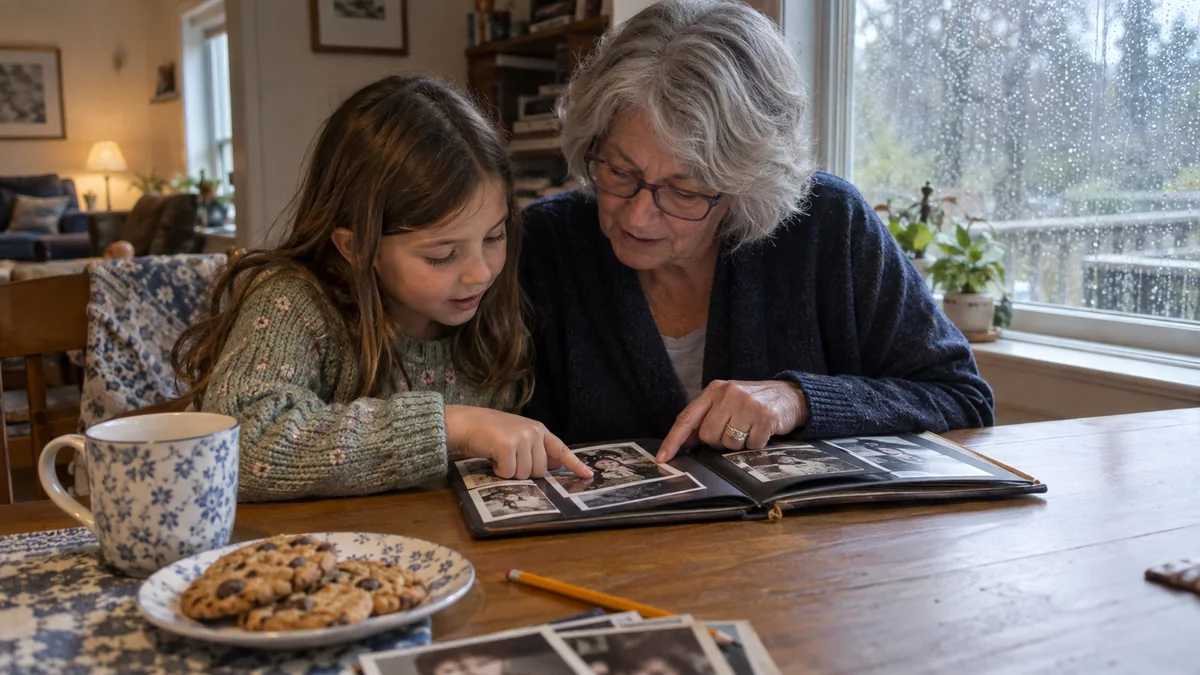
Long-distance grandparents can build a relationship with young grandchildren through small, repeated activities that invite a response: a familiar greeting, a shared drawing, a guessing game, or a story continued another day. Choose an activity the child enjoys and involve the adult who is with them. Letters, photographs, and recordings can keep the exchange going between calls.
“Tell Grandma about your day” is a lot to ask of a toddler holding a toy truck. “Can your truck deliver something to mine?” gives the child a way to join in. The aim is shared play, with room for wandering off, changing the game, or finishing early.
These eight activities are suggested family routines. The age groupings below are starting points, not developmental tests or required milestones.
What makes a video call easier for a young child?
Make the call responsive to the child rather than expecting the child to hold an adult conversation. Say what you notice, leave time for a response, and follow what they show you.
ZERO TO THREE’s research review on virtual family time describes the importance of a supportive adult and flexible, child-centered interaction. A child moving around during a call may still be participating. Looking continuously at the screen is not the only way to take part.
Before the call, agree on a convenient moment with the caregiver. Prop up the device so hands can be free. Check whether the grandparent can see what the child is showing. If the picture freezes, explain it simply: “Grandpa’s video stopped. He’s calling back.” A technical interruption is a reason to adjust the plan.
Choose an activity for the child in front of you
| Starting point | Try first | Adult help that makes it easier |
|---|---|---|
| Baby or young toddler | A short greeting, facial expression, or familiar sound | Stay close and respond alongside the grandparent |
| Toddler | A big, easy-to-see object or a simple copying game | Show the object to the camera and describe the response |
| Preschooler | Drawing, choosing between two objects, or adding to a story | Help set up materials and keep instructions small |
| Early school-age child | A shared project, letters, or a longer guessing game | Let the child choose the topic and when to finish |
Adapt every activity to the child’s interests and ways of communicating. They can point instead of speaking, draw instead of writing, or listen without performing for the camera.
1. Create a hello that belongs to the two of you
Repeat a small greeting at the start of each call. It could be two waves, a made-up animal sound, or a silly question with an answer the child chooses.
Try: Grandma taps the table twice and asks, “Who’s at my window?” The child holds up a toy or waves. Next time, use the same opening and see whether the child wants to add anything.
For a baby, a familiar voice and simple expression may be enough. For an older child, let them invent the greeting. The caregiver can join in, but there is no need to prompt the child until they respond correctly.
2. Build a tiny story around one familiar object
Use something the child already recognizes as the starting point. A stuffed bear, a toy bus, or a drawing gives both people something concrete to talk about.
Grandpa might say, “My bear found a blue door. What’s behind it?” The child can name something, point, or hold up an object. Grandpa adds one sentence and gives the child another turn. Stop with the bear going to sleep, then pick up the story another day if the child asks.
If you prefer a favorite picture book, ZERO TO THREE’s video-chat tips suggest using a copy at each end so the child can follow along. You do not need to finish the whole book in one call.
3. Play “which one did I hide?”
Turn a few familiar objects into a simple guessing game. The grandparent shows two large objects, moves one out of view, and asks what is missing. A mug and a hat are easier to distinguish on a small screen than tiny toys.
Let a toddler point to a matching object at home or have the caregiver offer the two names. A preschooler can take over as the person hiding something. Keep the objects easy to reach; the child does not need to race around the house.
If the video is blurry, change the game to sound: tap a spoon against a cup, rustle paper, or make an animal noise and take turns guessing.
4. Draw the next part of each other’s picture
Take turns deciding what goes into one drawing at each end. Grandma draws a circle, the child suggests wheels, and Grandma asks what the vehicle carries. The child can draw their own version or direct the whole picture.
Use thick lines that are visible on camera. Show the page after each addition rather than trying to film the paper continuously. For a child who prefers describing to drawing, let the grandparent do the drawing and the child choose the details.
After the call, exchange a photo of each picture. Refer to a detail next time: “Does that purple bus still carry cats?” This gives the next conversation an easy opening.
5. Take turns showing one everyday treasure
Each person chooses one ordinary thing with a small story attached. It might be a shiny leaf, an old key, a funny postcard, or something built from blocks.
Ask one concrete question: “Where did you find it?” or “What does it do?” Then switch. Grandparents get a turn too: a childhood photograph or a familiar kitchen tool can be interesting when introduced through one detail.
Avoid showing several things in a row or asking the child to explain every choice. If a photo catches their interest, these ideas for turning one family picture into a conversation can help you follow it.
6. Keep a small project in both homes
Choose something each person can return to between calls. Plant seeds in separate pots, build a different house from blocks, or add a page to a shared imaginary-town story.
For example, each person names a plant and sends an occasional picture. On the next call, compare what you notice: a new leaf, dry soil, or a pot that tipped over. The result does not need to match, and a plant that fails can be part of the story.
Choose a project the caregiver can accommodate without extra shopping or daily reporting. If it becomes another chore, leave it and choose something easier.
7. Mail a postcard with an easy reply
Give the child a physical reminder and a response they can manage. A grandparent might draw two funny hats and write, “Which should I wear on our next call?”
A young child can point to a favorite while the caregiver sends the answer. An older child can draw a hat of their own and mail it back. Letters do not need spelling corrections or a long written response.
For international mail or an uncertain delivery date, avoid tying the activity to a particular weekend. Show the postcard over video if it has not arrived, then let the envelope become a second small event later.
8. Send a recording the child can answer later
Use a brief personal message when live calls are difficult. The grandparent can show a drawing, share a family saying, or ask a playful choice question: “Should the bear take the train or the boat?”
The caregiver can share it at a convenient time, following the family’s usual media choices. If the child wants to reply, record their answer or send a description. A recording cannot respond in the moment like a live call; the exchange happens when the next message comes back.
Ask before saving or sharing recordings beyond the intended family members. A private exchange does not need to become social media content.
What if the child walks away or does not want to talk?
Offer a choice and let the call finish. “Do you want to show me the truck, or shall we say goodbye?” gives the child an easy way to respond. Do not require a kiss, hug, or spoken answer before ending.
Tell the grandparent in advance that a short call can still be worthwhile. They can continue talking to the caregiver while the child plays nearby, if that suits everyone. At the next call, begin with something familiar instead of asking why the previous one was so short.
For adults juggling the family schedule, our practical guide to staying close to distant parents includes a flexible way to plan contact.
Frequently asked questions
How long should a grandparent video call last?
Start with enough time for one short activity and follow the child’s interest. There is no target duration in this guide. Finish or change direction when the child wants a break, and choose a time that also works for the caregiver.
How can grandparents connect with a toddler who barely talks?
Use visible objects, gestures, familiar sounds, and turn-taking. A caregiver can describe what the toddler is pointing to or help show a toy to the camera. Participation does not require complete sentences.
What can long-distance grandparents do without video calls?
Exchange postcards, drawings, printed photographs, audio messages, or small shared projects. Choose a format the household can comfortably manage. A parent can help a young child respond when they want to.
Do grandparents need to send gifts to stay involved?
The activities here require no regular gift buying. Use household objects, paper, familiar stories, or a phone call. Agree with the parents before sending materials that create storage, cost, or supervision needs.
Start with one familiar thing
Choose one activity for the next call and ask the caregiver what timing works. Repeat it if the child enjoys it; change it if they do not. When you are together in person again, you can bring back the greeting, picture, or story you made from afar. For visit-day ideas, see our pick-a-memory menu for grandparents.
About this guide: Written by the HeyBondi Editorial Team. The activity instructions are editorial suggestions, not a tested developmental program. ZERO TO THREE guidance was reviewed on September 30, 2026. HeyBondi is developing a pre-release family companion; these activities do not depend on a HeyBondi product.